
 Cockpit, Renault 25 (X29)
Photos
- Cockpit, Renault 25 (X29)
 Cockpit, Renault 25 (X29)
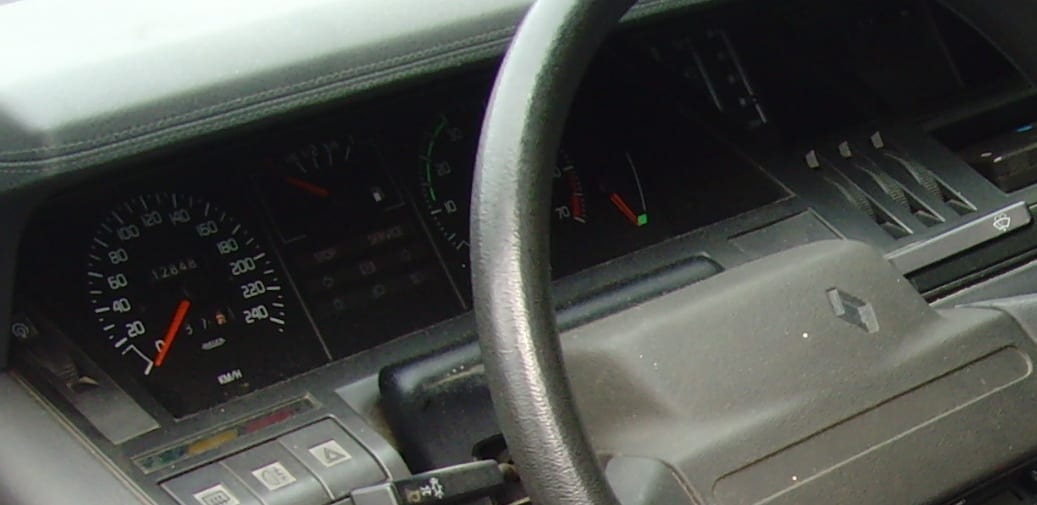 Instrument cluster, Renault 25 (X29)
Photo credits
Photo credits (3)
- Renault 25 (X29), photo 1Cockpit · “Renault 25 TI interior” (opens in a new tab) · Photo: Klaus Nahr from Germany · CC BY-SA 2.0 (opens in a new tab) · Wikimedia Commons
- Renault 25 (X29), photo 2Cockpit · “R25 baccie” (opens in a new tab) · Photo: Qwerty5113 · Public domain · Wikimedia Commons
- Renault 25 (X29), photo 3Instrument cluster · Cropped from “Renault 25 TI interior” (opens in a new tab) · Photo: Klaus Nahr from Germany · CC BY-SA 2.0 (opens in a new tab) · Wikimedia Commons
Elements
Details
Summary
The Renault 25's angular, button-heavy dashboard paired analog dials with liquid-crystal readouts, gave upper versions a male-voiced warning system and let the driver run the Philips stereo from a satellite by the steering column.
Specifications
Cockpit
Instrument cluster
Oil-pressure and coolant gauges sit outboard of a large speedometer and rev counter. Between the dials, liquid-crystal displays show the trip computer and a digital fuel level, above a row of 13 warning lights including stop and service warnings.
Infotainment
Philips radio-cassette with steering-column satellite remote
Philips designed the 25's audio systems, up to a six-speaker set-up with graphic equaliser; the column satellite was an early remote audio control.
Speech synthesiser (talking warnings)
Messages could be repeated or cancelled and covered doors, bonnet or boot not properly shut, the handbrake and low fuel, among other alerts.
Controls
Heating and ventilation were set with rotary thumbwheels; automatic climate control was available on top versions. Cruise-control buttons sat on the steering-wheel spoke, and an infra-red key fob locked the doors.
Notes
Car magazine's launch review found the mix of conventional and digital instruments confusing, and the liquid-crystal displays hard to read in side sunlight.