
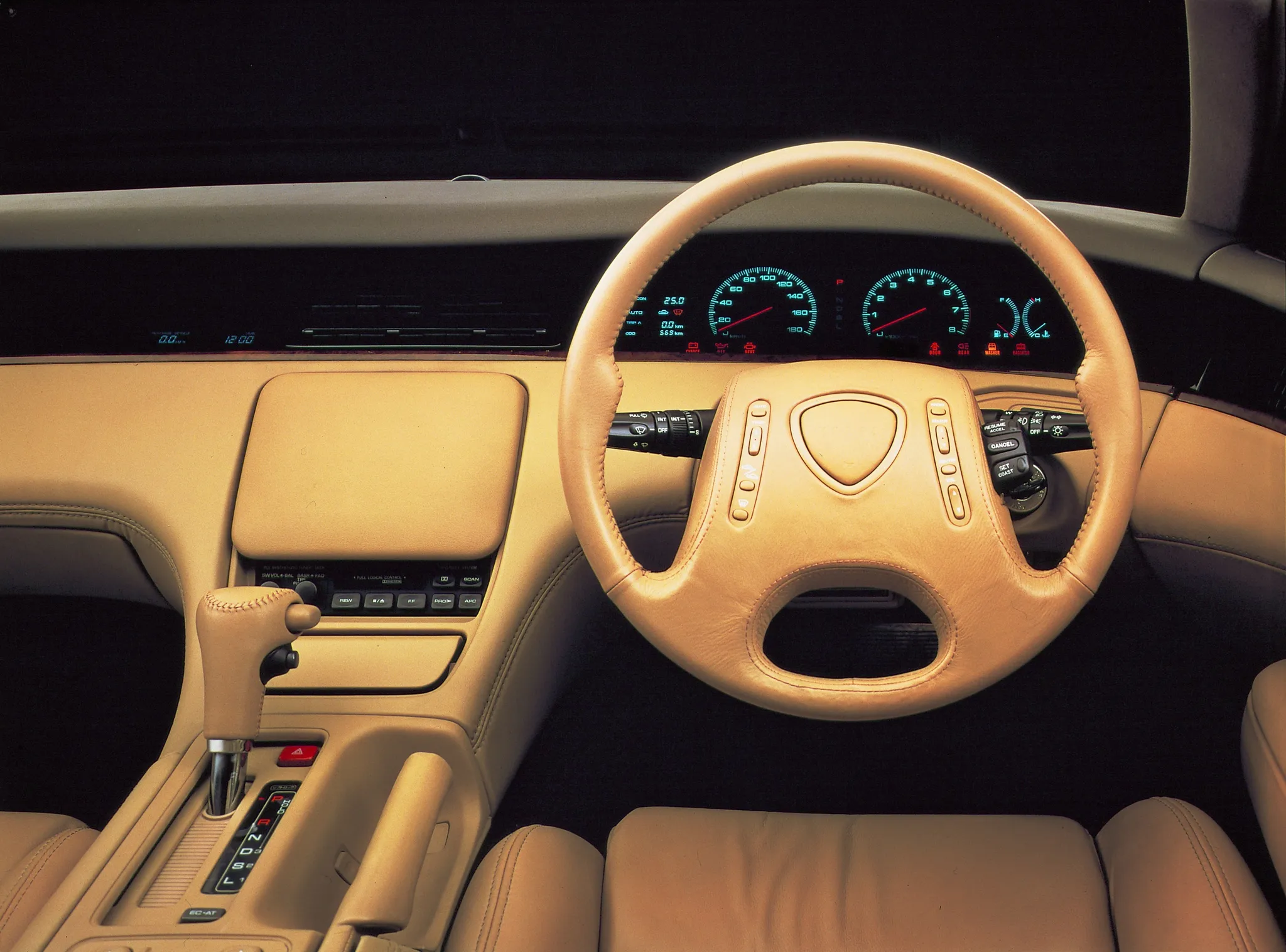
 Cockpit, Mazda Eunos Cosmo (JC)
Photos
- Cockpit, Mazda Eunos Cosmo (JC)
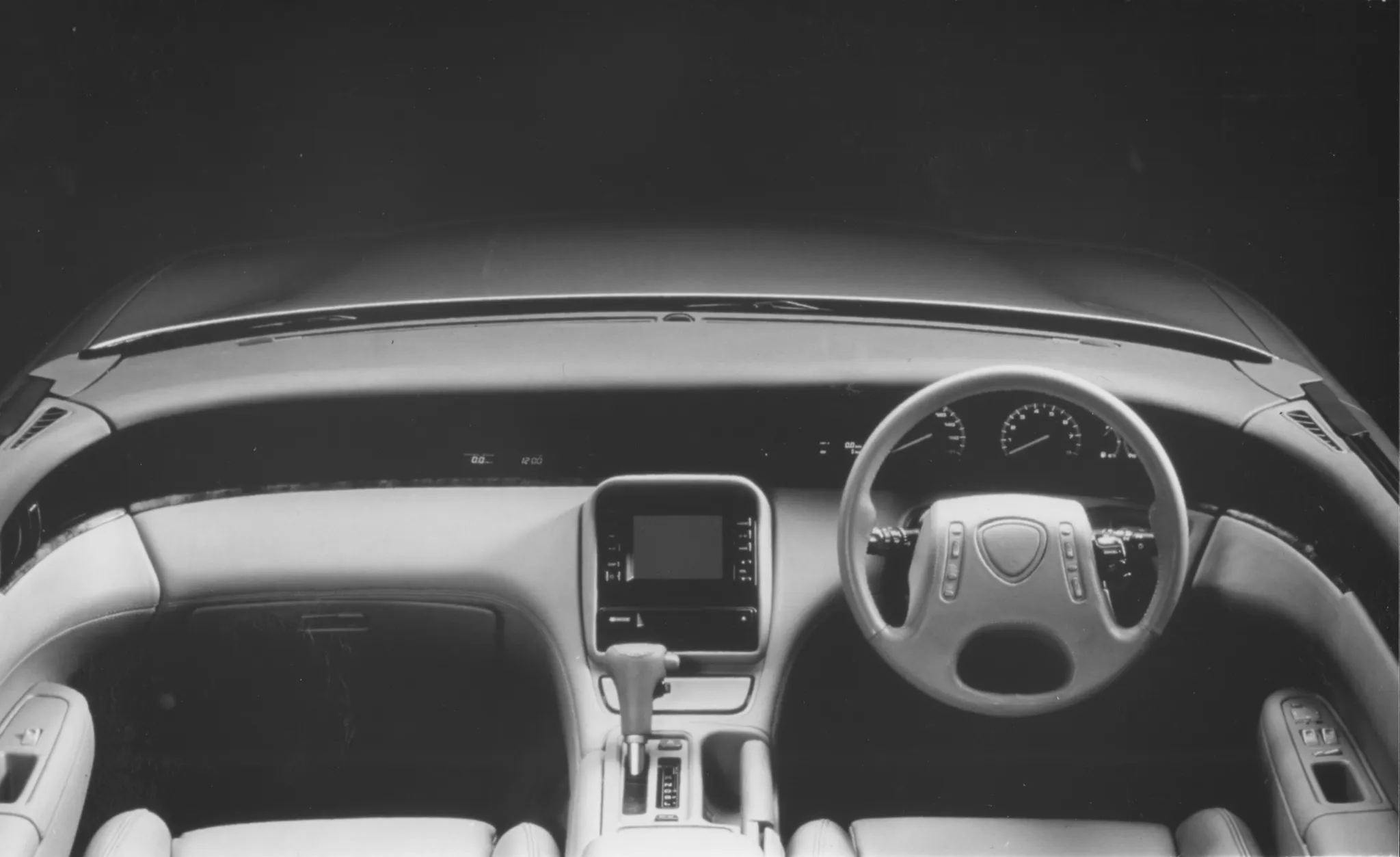 Cockpit, Mazda Eunos Cosmo (JC)
 Cockpit, Mazda Eunos Cosmo (JC)
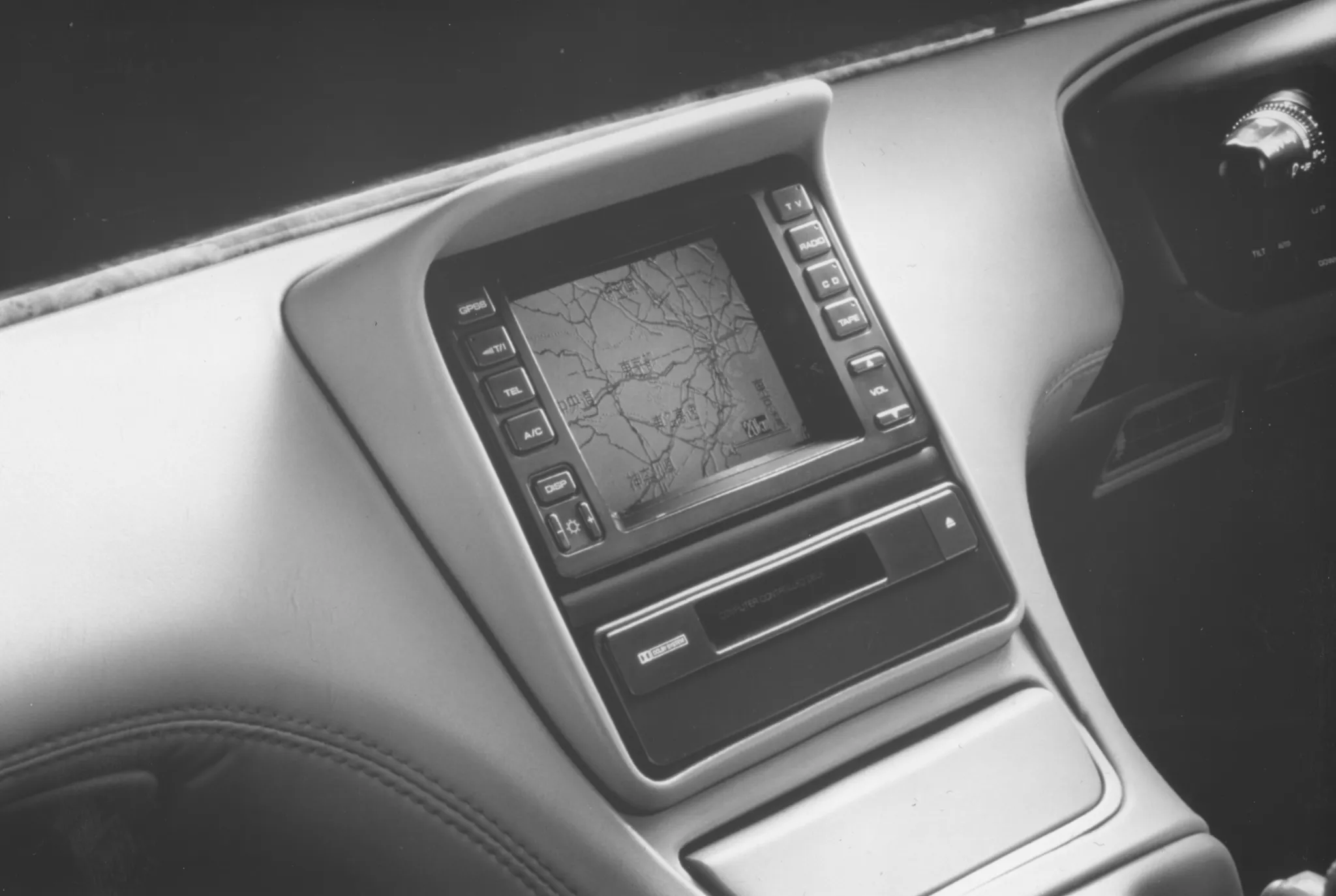 Centre display, Mazda Eunos Cosmo (JC)
Photo credits
Photo credits (4)
- Mazda Eunos Cosmo (JC), photo 1Cockpit · “Eunos Cosmo (3rd gen. model, 1990 debut)” (opens in a new tab) · © Mazda · Editorial use (opens in a new tab) · Mazda Newsroom
- Mazda Eunos Cosmo (JC), photo 2Cockpit · “10 Pass Mazda Cosmo mit Satelliten Navigation 1991 1 hires hires” (opens in a new tab) · © Mazda · Editorial use (opens in a new tab) · Mazda UK Press Packs
- Mazda Eunos Cosmo (JC), photo 3Cockpit · “Mazda Cosmo 20B (31660516458)” (opens in a new tab) · Photo: FotoSleuth · CC BY 2.0 (opens in a new tab) · Wikimedia Commons
- Mazda Eunos Cosmo (JC), photo 4Centre display · “11 Pass Mazda Cosmo mit Satelliten Navigation 1991 2 hires hires” (opens in a new tab) · © Mazda · Editorial use (opens in a new tab) · Mazda UK Press Packs
Elements
Details
Summary
In 1990 the Japan-only Eunos Cosmo launched with the Car Communication System, a colour CRT touchscreen that combined GPS navigation with the climate control and TV.
Specifications
Cockpit
Instrument cluster
Analog-style gauges in a backlit strip that runs across the dashboard. The gear display switches from PRNDSL to PRND321 when the four-speed automatic is put in manual mode.
Centre display
Car Communication System (CCS)
Navigation combined satellite positioning with dead reckoning and showed a 2D map accurate to about ±50 m. The screen also ran the radio, CD player and an optional car phone. Offered as its own grade, the Type-E CCS, at ¥650,000 more than the Type-E, and on the Type-S from 1994.
Controls
On CCS cars the fully automatic climate control can be operated only through the touchscreen. Other cars have an LCD climate panel with physical buttons, a hinged lid over most of the DIN-size audio unit and a short hood that keeps glare off the centre controls.
Facts
- The Cosmo's GPS navigation was the first automotive application of GPS.[1][5]
- Mitsubishi Electric developed the Car Communication System with map publisher Zenrin, and it arrived with the car in April 1990.[2][4]
- Pioneer's Carrozzeria AVIC-1, the first aftermarket GPS navigation unit, followed in June 1990, about two months after the Cosmo.[2]