
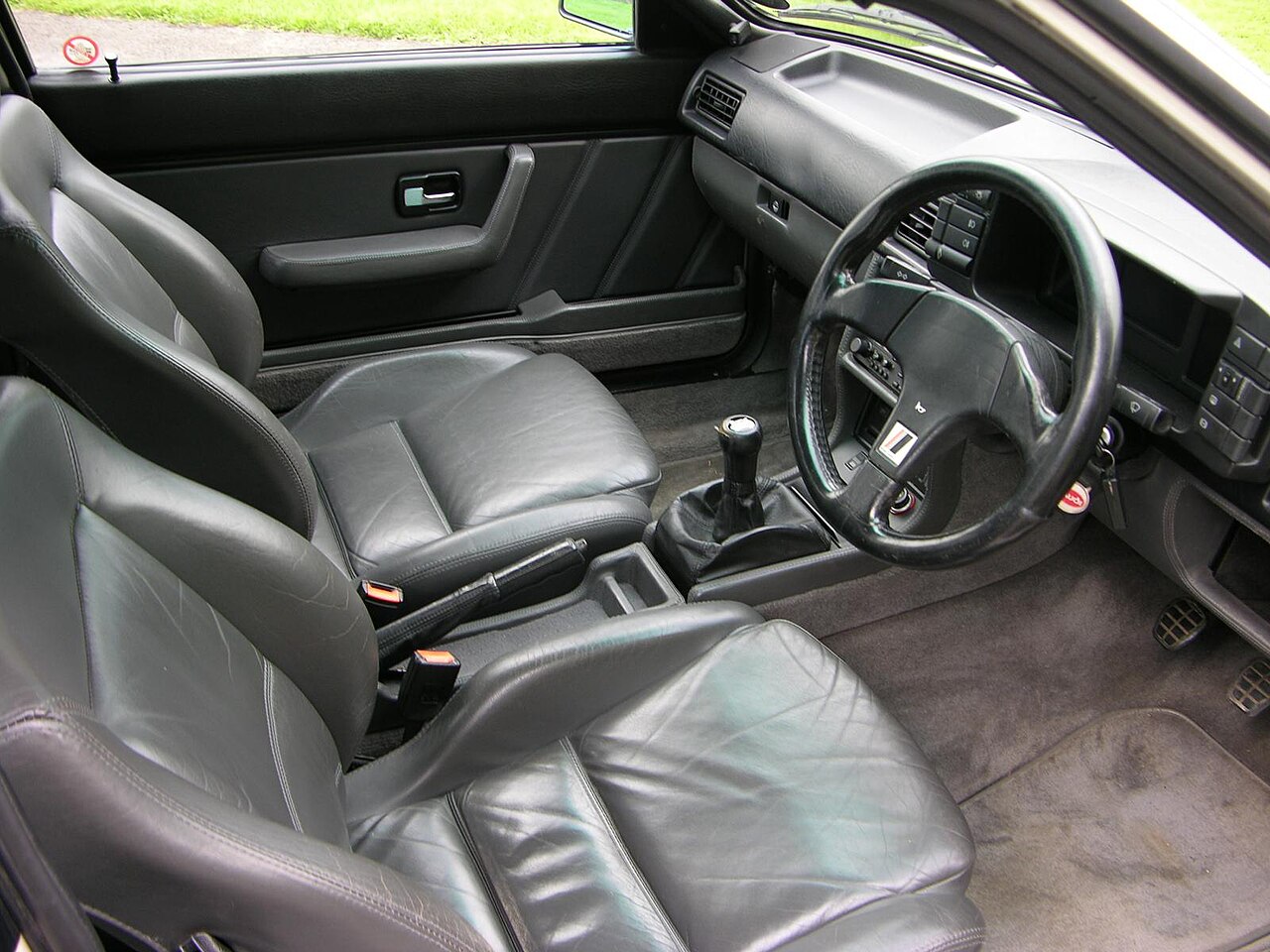
 Cockpit, Audi quattro (Typ 85)
Photos
- Cockpit, Audi quattro (Typ 85)
 Cockpit, Audi quattro (Typ 85)
 Instrument cluster, Audi quattro (Typ 85)
 Controls, Audi quattro (Typ 85)
 Other, Audi quattro (Typ 85)
Photo credits
Photo credits (5)
- Audi quattro (Typ 85), photo 1Cockpit · “1990 Audi Quattro 20V - Flickr - The Car Spy (9)” (opens in a new tab) · Photo: The Car Spy · CC BY 2.0 (opens in a new tab) · Wikimedia Commons
- Audi quattro (Typ 85), photo 2Cockpit · “Audi Quattro 20V - 007” (opens in a new tab) · Photo: The Car Spy · CC BY 2.0 (opens in a new tab) · Wikimedia Commons
- Audi quattro (Typ 85), photo 3Instrument cluster · “1990 Audi Quattro 20V - Flickr - The Car Spy (8)” (opens in a new tab) · Photo: The Car Spy · CC BY 2.0 (opens in a new tab) · Wikimedia Commons
- Audi quattro (Typ 85), photo 4Controls · “1990 Audi Quattro 20V - Flickr - The Car Spy (6)” (opens in a new tab) · Photo: The Car Spy · CC BY 2.0 (opens in a new tab) · Wikimedia Commons
- Audi quattro (Typ 85), photo 5Other · “Audi Quattro 20V - 008” (opens in a new tab) · Photo: The Car Spy · CC BY 2.0 (opens in a new tab) · Wikimedia Commons
Elements
Details
Summary
From 1983 the quattro replaced its dials with a green digital display and a synthesised voice.
Specifications
Cockpit
Instrument cluster
A digital display in place of dials, in a binnacle with switches running down both sides.
Controls
The binnacle, centre console and switchgear were redesigned for the 1984 model year.
Facts
- At launch the quattro had analog instruments: a binnacle with a speedometer and tachometer, smaller boost and fuel gauges, and a clock.[3][2]
- A green digital instrument display replaced the analog dials in 1983.[3][2][1]
- The digital dashboard came with a synthesised voice that gave spoken prompts such as a reminder to refuel.[3][2]
- The display changed from green to orange in 1988, the year 200 special-edition cars were built with an analog cluster.[1]
- Digital voltage and oil-temperature readouts were added to the centre console in 1985.[2][3][1]
- Audi built 11,452 quattros between 1980 and 1991.[1]